




9
oct.
2025
10
oct.
2025
Colloque international : CineTerrorism
CineTerrorism associe l’étude scientifique de la représentation du terrorisme au cinéma à une réflexion dans le cadre de la Recherche Création Cinéma sur l’écriture sérielle et la question du terrorisme. Une équipe d’intervenants universitaires dialoguera avec des professionnels du cinéma : réalisateurs, producteurs internationaux devant nos étudiants de master et nos doctorants. Projet dans la continuité de S4C Storytelling vs Counterterrorism innovateur transversal croisant les règles du storytelling et la recherche historique et sociologique.
Program
Thursday, October 9th
12h30-13h30 Brigitte Gauthier, “S4C Storytelling4Counterrorism - Experimentations”
This conference will present the Research Process involved in gathering scientific and on field data regarding 15 years of Terrorism.
13h30-14h30 Lunch
14h45-15h30 Pedro Mogorron, “La couverture médiatique des attentats de Madrid 2004”
On March 11, 2004, four simultaneous attacks (unprecedented in Europe) in the suburbs of Madrid killed 192 people and injured nearly 2,000. (The European Union established March 11 as European Day in memory of the victims of terrorism). The attack took place three days before the general election in Spain. Al-Qaeda claimed responsibility for the attacks, but the two main political parties (right and left) were aware from the outset of the significance of the attack for the election results. The government focused on the Basque ETA as the perpetrator, while the Socialist Party (PSOE) focused on Spain's involvement in the Iraq War as the cause. Both parties tried to manipulate the attacks to their advantage in order to win the general election. We will discuss the political manipulation and the coverage given by the Spanish and international press.
Pedro Mogorron is a Professor of Translation, Faculty of Philosophy and Letters of the University of Alicante / Spain. He is a specialist in contrastive analysis, lexicology and phraseology. He directs the research group FRASYTRAM (Multilingual Phraseology and Translation). His research deals with the areas of terminology, phraseology, corpus studies in which he is highlighting the importance of diatopia and interculturality for the search for equivalence. He has participated in several research projects funded by the M.E.C, Micinn, AECI, the University of Paris 13, the University of Alicante, etc.
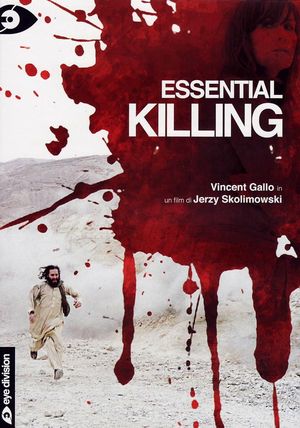
16h-17h30 Screening: Essential Killing (2010)
Synopsis: Captured by American forces in an unnamed desert conflict, a man is transported to a secret prison in Europe. When a convoy accident allows him to escape into a vast, snow-covered wilderness, he must rely solely on instinct and physical endurance to survive. Pursued by soldiers, helicopters, and dogs, he struggles through forests and frozen landscapes, driven by hunger, fear, and the sheer will to live. Stripped of dialogue and clear political context, the film becomes a raw study of survival beyond ideology.
Starring: Vincent Gallo, Emmanuelle Seigner. Length: 83 minutes.
17h45-18h30 Karolina Klapkowska, "Adam Sikora and Jerzy Skolimowski’s Essential Killing: Visualizing Survival Beyond Ideology"
This paper analyzes the visual language of Essential Killing (dir. Jerzy Skolimowski, DoP: Adam Sikora), focusing on how the film abstracts political terror into a cinematic experience of survival. It proposes a reading that moves beyond geopolitics to examine the body, landscape, and silence as core elements of the film’s aesthetics.
Karolina Klapkowska – Writer/Director/DoP Karolina Klapkowska is a Polish cinematographer, writer, and director, and a PhD candidate in Film and Theatre Studies at the Krzysztof Kieślowski Film School, University of Silesia. Her artistic and academic work explores the visual language of cinema and the relationship between image, memory, and space. She has directed award-winning short films screened at international festivals including Interfilm Berlin, Cottbus, Tous Courts Aix-en-Provence, Ann Arbor, Camerimage, and New Horizons. She has also worked as a camera operator on feature films and as a director of photography on television documentaries. In 2024 she joined WFL Lab (led by Brigitte Gauthier) and HerArtsLab in Paestum, Italy, where she is developing her debut feature Let it burn. She also teaches film history and cinematography at the University of Silesia.
18h45-19h45 Fotis Karagiannopoulos, “From Invasions to Ideologies: The Long Link Between Migration and Terror”
Throughout history, migration has at times been associated with episodes of violence that fueled fears and political backlash. In 410 AD, the Visigoths, a displaced migrant group fleeing the Huns, famously sacked Rome, shocking the Roman world and marking a turning point in the Empire’s decline. Over a millennium later, in the 20th century, Jewish refugees fleeing Nazi Germany were falsely accused in various countries of being communist infiltrators or security threats—a tragic example of how fear distorted the perception of desperate migrants. More recently, the 2015 Paris attacks, perpetrated by ISIL-affiliated terrorists, some of whom entered Europe disguised as Syrian refugees, reignited global concerns over border security and the potential misuse of asylum routes for violent ends.
Fotis A. Karayannopoulos is a Senior Associate at KLC Law Firm. He is a practicing lawyer with 24 years field experience in Greece and many EU and non-EU States on all sorts of international law matters and business transactions. He teaches International and EU Business Law in France and non-EU countries. Fotis is the Special Counsel for the Greek National Broadcaster (ERT) and a member of the Legal Committee of European Broadcasting Union. He also consults foreign governments (Balkans, Asia, Africa) on international law and foreign investment matters. His extensive experience covers all matters on Corporate and Business Law, European Union Law, International transactions, Intellectual Property (IP) Law, Media Law, Human Rights and Justice Reform, foreign investments and public procurement.
Friday, October 10th
10h15-11h45 Brigitte Gauthier, Screening of NTNM Master students short sequences on films depicting terrorism
12h-13h30 Frederic Esposito, « Les Médias dans la lutte contre le terrorisme »
After the attacks of September 11, 2001, American media networks dominated coverage and dissemination of security issues. They established themselves as the benchmark for other major Western media outlets, contributing to the creation of a “clash of representations” based on an ideologically constructed model also referred to as a “clash of civilizations”: absolute evil was perceived as coming from the Near and Middle East, from which it was necessary to protect oneself and differentiate oneself by promoting a return to the most hackneyed ethnotypes of Orientalism. By promoting the idea that the world was exposed to a new kind of terrorism (“hyperterrorism,” “new terrorism”), a major ideological shift was brought about, both in terms of geopolitics and general policy. Since the response to the attacks of September 11, 2001, the United States has thus established a hierarchy of threats considered to be a global agenda applicable to the entire planet, designed to respond to “global” threats and ultimately asserting itself as the only method of managing international crises. Although this logic of rupture has lost intensity over the past two decades, the endless war on terrorism and its military, political, and legislative consequences have nevertheless dominated the international agenda. The collusion between the sensationalization of violence and political power is certainly very old, and when it comes to terrorism, it goes without saying that media communications have greatly contributed to the creation or transformation of social representations. Specifically, by ensuring that attacks receive coverage that goes beyond a simple account of reality, the media have exerted an influence that has gone so far as to disrupt the value system and hierarchy of issues within the international community.
Frédéric Esposito est professeur en relations internationales au Global Studies Institute depuis 2013. Il est également co-fondateur et Directeur de l’Observatoire universitaire de la sécurité (OUS) au sein du GSI. Il est également membre du Conseil consultatif de sécurité (CCS) de la République et canton de Genève. Politologue (UNIGE) et diplômé en relations internationales de l'Institut universitaire de hautes Etudes internationales et du développement (Genève), il a été successivement chercheur invité à l'Institut européen de Florence et à la Harvard Kennedy School. Il fut directeur exécutif du Forum de l'Université " Démocratie et terrorisme " de la Société académique de Genève au sein de la Faculté de droit et il a participé comme chef de projet au programme de la Commission européenne "Villes contre le terrorisme" (DG justice, liberté et sécurité, projet pilote d'aides aux victimes d'actes terroristes). Ses domaines d'enseignement et de recherche portent sur la gouvernance européenne, la démocratie électronique et la lutte antiterroriste.
14h45-15h15 David Fonseca, "The Nolan Batman trilogy & Terrorism"
In his film The Dark Knight Rises, Christopher Nolan establishes Batman as a paradigmatic value in the struggle that liberal democracies must necessarily wage against terrorism. Batman would become both savior and model. So much so, that in the United States, intellectuals and politicians have seized on this figure in order to conceive of the fight against terrorism in terms of the establishment of a special police force, paradoxical in both its effects and its power - a force of law outside the law - embodied by the famous bat. But this struggle, which reconfigures the democratic and liberal space, actually disfigures it. It would install, in fact as in law, a sovereign police force which, tasked with tracking down a terrorism that is by definition constantly on the run, would have irreparable effects on the entire social body that it was intended to protect.
15h30-16h15 Cecile Coquet-Mokoko, "Terrorism and the appropriation of the rhetoric of divine election in US domestic and international conflicts, from the 19th century to the present"
The rhetoric of exceptionalism, which has accompanied the colonization of North America, is religious at root. This paper will examine how the ideas of divine election of a Chosen People and geographical predestination of the American continent have been appropriated by domestic terrorist movements in the 19th century and destabilized in the wake of 9/11, up to the Trump presidency's weaponization of immigration. Prof. Cécile Coquet-Mokoko, Professor of American Studies at the University of Versailles-Saint Quentin (France), has 30 years of experience of historical and sociological research on race and gender relations in the USA from the 19th century to the present, particularly in the Deep South, and on the legacy of colonialism and slavery in interpersonal relations in France, the UK and the USA.
16h30-17h Fanis Synadinos, Terrorism and social movements through the lens of cinema and TV: the Greek example
The depiction of terrorism and social movements in Greek cinema and TV has been a common theme, reflecting the country's turbulent history and political landscape. From the struggles against authoritarianism in the 1960s and 1970s to more recent episodes of domestic terrorism, Greek filmmakers and TV producers have explored these complex and often controversial topics. Drawing from the assassination of Greek politician Grigoris Lambrakis in 1963 ("Z" directed by Costa-Gavras) to the assassination of antifa rapper Pavlos Fyssas in 2013, the pogroms against immigrants and the social movement of Aganaktismenoi (citizens occupying public squares), we will explore the ways of their depiction in Greek cinema.
Fanis Synadinos is a Greek producer. In 1997 he created E-prod, a company focused on audiovisual productions. From the outset E-prod has been characterized by its excellent combination of technology, creativity, and speed. The continuous upgrading of its infrastructure, the professionalism of its staff, and the range of services it offers, deem E-prod a modern company that knows how to respond to the high demands of large-scale events, television and audiovisual productions, and the communications sector. E-prod has produced more than 3,000 hours of television programs (comedy and drama series, current affairs programs, morning shows etc), several historical documentaries about minority groups (the Vlachs/ the Pomaks of Thrace/ the Tsakones of Peloponnese), Greek and international movies (Meine Frau, ihr Traumman und ich/ SPIELTRIEB/ the heart of the Beast etc.)
17h-17h30 Brigitte Gauthier / Jean William “Bruno” Muller, "The Mauritian" (2021 British cinema UK copro.)
Framing counterterrorism as a test of our values, not just our fears. Few films dare to confront the truths that The Mauritanian lays bare. Anchored in the harrowing ordeal of detention without charge, it drags the War on Terror from the realm of distant headlines and smashes it into the visceral turmoil of torment, systemic abuse, and the relentless stripping of dignity. The film focuses on Mohamedou Ould Slahi’s relentless, shadow-filled years behind bars at Guantánamo, weaving together hard-fought legal battles and a weight of emotion that never relents, always asking: can fear ever justify tearing up the rulebook? Jodie Foster channels tightly contained fury, while Tahar Rahim’s quiet resilience grounds the drama, exposing sharp fault lines between government evasions and raw human determination. Macdonald’s direction avoids melodrama, probing something more sombre and wounding; a bleak portrait of a country safeguarding itself only to slip further into moral uncertainty. Rather than offering tidy closure, the film confronts viewers with a harsh realisation: Counterterrorism inevitably reflects the very ideals it claims to uphold, muddying the line between security and complicity. The Mauritanian is far more than the story of one man’s wrongful imprisonment; it lays bare democracy at its most fragile, insisting we ask whether panic can ever truly justify dismantling the principles we are meant to protect.
Jean William “Bruno” Muller is a London‑based producer and development editor across film, documentary and hybrid projects. An NFTS MA (Creative Business) graduate, he brings a committed , empathetic approach to story shaping with a passion for real‑life narratives. Experienced front and back of camera - facilitating table reads, story diagnostics, scene‑by‑scene notes and on‑camera interviews. Supports fundraising and co‑production - co‑producer decks, funding strategy, grants, investor outreach and clear communications. Ready to add value in the Paris production room … clarifying priorities, setting timelines and helping drive a practical launch plan.
17h30-18h30 Brigitte Gauthier / Barry Braverman, "Figthing Terror: the filmaker as an agent for positive change"
In 2010, amid the growing turmoil of the Arab Spring, I led a months-long camera workshop for aspiring filmmakers in Cairo. My sixteen students were a diverse lot with clashing ideologies reflective of the combattive discourse of the greater Middle East. One student, twenty-two-year-old, Karim Soliman, had grown up and still resided in ‘Garbage City’, the most desperate of Cairo's notorious slums. Against all expectations, his exquisitely photographed short film depicted a neighborhood painter who imagines and sketches a thriving cityscape superimposed over the slum's utter destitution. Touchingly, the painter befriends a young, would-be artist to share his life-affirming vision. And here's the thing: When 'Sketch' screened at a local theater in front of Karim’s 'Garbage City' neighbors, a miraculous transformation seemed to occur: Karim's neighbors began to see their community in a new way, no longer as much as victims but as observers. For the neighbors and the world as a whole, this change of perspective may well be the necessary first step for positive change in communities like 'Garbage City' that have long been potent breeding grounds for international terrorism.
Sketch by Karim Soliman (Egypt, 2010)
Barry Braverman is a U.S. based cinematographer with forty years of experience in feature films and documentaries. Notable credits include Ridley Scott's Equals, Wes Anderson's Moonrise Kingdom, Ben Moses' A Whisper to a Roar, and Richard Donner's Lethal Weapon 4. A recognized author and educator, Braverman has a deep understanding of the latest trends and technologies including 3D and VR360. He has conducted camera and visual storytelling workshops around the world at film schools and universities like NYU, UCLA, The London Film School, FAMU, and the Satyajit Ray Film & Television Institute. His book Video Shooter (3rd Edition from Focal Press) has been translated into 11 languages, and is used widely by students on six continents.

18h30-19h45 Screening: Souls in Transit (Aida Schläpfer Alhassani, 2021)
Synopsis: This documentary tells the story of a largely unknown genocide. In 1915, about 3 million Christians were killed by the Ottoman Empire. The film tells the story of this massacre with the help of contemporary witnesses and relates it to the present. The genocide of 1915 finds its tragic continuation in current conflicts.
Aida Schlaepfer Alhassani was born in Baghdad to a Lebanese mother and an Iraqi father, spending her childhood between her parents’ homelands. At age 20, she moved to Europe, studying German for several years before settling in Switzerland. Despite graduating in accounting and business management, Aida pursued her passion for film and the arts, earning a degree in Art and Media Design at F+F Schule für Kunst und Mediendesign in Zurich. In 2003, she relocated to Egypt to attend the High Cinema Institute at the prestigious Academy of Arts in Cairo, where she earned a postgraduate diploma in Film Directing. Aida’s filmography includes works such as Shadow Black and White (2001, Video), Silent Screaming Inside a Woman (2002, Video), East and West Dancing (2003, Video), Marionette (2005, 35mm), an educational film created in 2006 for the German School in Cairo, Gangs of Baghdad (2007, HD Documentary), Homeland (2010, DVC Documentary), Ana Esmy Mwaten Masry (My Name is Egyptian Citizens, 2011, HD Documentary), To Be We Also Want to Be (2013, HD Swiss Documentary), Noun (2015, Iraq Documentary), and Souls In Transit (2021).